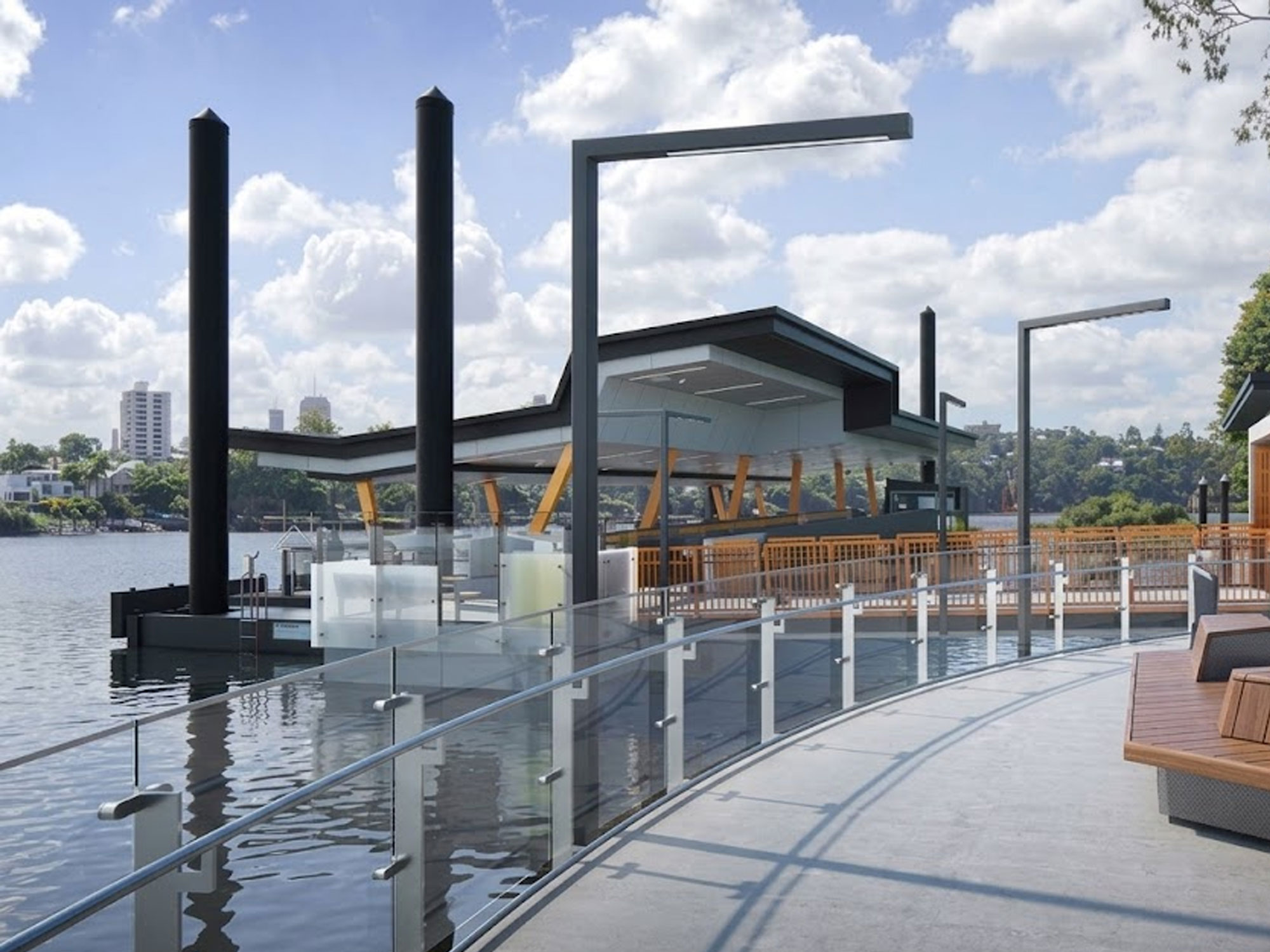

Kingsford Smith Drive functions as a critical artery for Brisbane. Today, its outer edge offers a much slower rhythm for residents of Hamilton. The Lores Bonney Riverwalk extends directly over the water to provide an uninterrupted path for daily walkers, runners, and cyclists.
Expanding the public realm
A cantilevered structure pushes pedestrians away from heavy traffic and closer to the natural environment. According to Shannon Satherley of Landscape Australia, the landscape design effectively enhances public experiences of the Brisbane River while illuminating the historical contributions of women. Subtropical plantings frame the edge to create a soft buffer between the road and the active recreation area.
Beneath the surface, the engineering ensures the structure withstands the tidal nature of the Brisbane River. Designers selected high-grade stainless steel reinforcement for the cantilevered sections to resist the corrosive effects of brackish water. This structural choice guarantees the pathway will remain stable and secure for generations.
Creative interventions physically embed local history into the surface of the pathway. As documented by the curatorial team at Onespace, local artist Judy Watson integrated ground plane artworks to reflect the untold stories of Indigenous and non-Indigenous women. These visual markers guide walkers along the route and turn a standard exercise session into an act of discovery.
Guiding the way home
The civic space also honours a significant local figure. Brisbane City Council heritage records note that the walkway takes its name from Lores Bonney, a pioneering aviator who once lived in the local area. At night, glowing beacons by artist Kenji Uranishi reference the large Orchard Swallowtail butterfly and act as gentle wayfinding tools for evening walkers.
The pathway connects visitors to the rejuvenated Cameron Rocks Reserve. As noted by landscape firm Bland 2 Brilliant, construction teams placed thousands of individually cut stones to form a distinct arc around the historic war monument. This quiet node provides direct river access and offers visitors a dedicated space for reflection.
The entire walkway spans more than one kilometre and links smoothly to the broader Bretts Wharf precinct. Families use the flat surface for morning strolls, while commuter cyclists enjoy the safety of separated lanes. The generous width prevents bottlenecks and encourages a comfortable pace for all users.
Civic infrastructure usually prioritises speed, yet this coastal addition actively slows things down. The path grounds Hamilton to its waterfront and offers an enduring public space alongside a busy thoroughfare.